Sunday, January 22, 2012

Advice for Republicans: Scratch that Itch, Then Move On

Let us assume, hypothetically, that a voter believes that a partial list of persons who would be a better president than Barack Obama -- maybe not that voter's first choice, but just a better choice -- would include Mitt Romney, Newt Gingrich, Rick Santorum, Howie Mandel (all right, he's Canadian, but POTUS doesn't think one's birthplace is important, why should we?), Khloe Kardashian, David Lee Roth, and the constitutionally qualified population of Flasher, North Dakota.  And that the short list of persons who would be worse would include Michael Moore, Pauly Shore, and Joe Biden.

All right, that's hyperbolic.  But the point is that our hypothetical voter thinks that Barack Obama has been a haahhhrrible president.  Whose defeat later this year is imperative to prevent further damage to the Republic and to begin to reverse the damage already done.

And let's say that our hypothetical voter is a Republican preparing to vote in a primary.  And it's even possible, not necessary, but possible, that our voter voted for the President and is not only disappointed, but feels a little  .  .  .  misled.  Misled by the candidate Obama, misled by the mainstream press.

And our voter is mad and getting madder with each new baffling decision and utterance of the President, apparently composed in the brief intervals between rounds of golf, vacations, smoke-and-cocktail breaks, and parties.  Our voter is reminded of her dissatisfaction daily because the Republicans are lining up to try to take his job, pounding away at him.

Michelle  .  .  .  isn't helping.

But our voter knows our President is a smart guy, a very smart guy, a very smooth guy, a good talker, wears clothes beautifully, handsome, a charismatic presence.  Bad as he's been, he could fool enough people again.  Could win, could well win. 

This is very upsetting to our hypothetical voter.  It makes her mad.

And she starts to think a thought that makes her smile, that gives her something to look forward to. 
She thinks: Newt Gingrich would absolutely dismantle Barack Obama in a debate.  He's brainier, he's a better speaker, he's a master of facts -- and he's nasty.  He would penetrate the President's smugness, his condescension, his scolding pedagogy.  All right in front of him, with the whole nation watching.

Newt?  Newt??  Newt!!

Ahhh.  That feels good.  She taps the touch-screen next to his name, smiles again, and sends her vote to the primary election computer.

It is at this point that your decidedly nonhypothetical Cool Hot Center steps into the frame.

Newt Gingrich and I agree on many things.  You will note that he was on my list of improvements over POTUS.   One thing we disagree on is his suitability as the Republican nominee.    One other thing is the likelihood that come November, more voters will agree with me on this point than with him, and his candidacy will have ensured four more years of the terrifying Obama.

It may feel good to throw in with Newt’s soaring rhetoric and liberal-elite-bashing now, but the man cannot be elected.  He is angry.  Like Tea Party angry.  But the Tea Party is not going to elect the next President, just like mainstream conservatives did not elect John McCain.  Or Bob Dole.  Or even George H.W.  Bush against Clinton. 

I agree with our hypothetical voter that Newt might well demolish POTUS in debate for all the reasons she imagines.  But Newt is a man who is not in control of either his thoughts or his mouth.  Did you listen to his victory speech in South Carolina?  He cannot help calling the President stupid,  which few sincerely believe irrespective of their disapproval of the man.   In expressing incredulity at the President’s decision on the Keystone pipeline, he offered this witless appraisal:  “It’s one thing to say the White House can’t play chess, it’s another to say it can’t play checkers,” he said.  “But tic-tac-toe?”   The crowd was notably silent after this gratuitous shot.   And that wasn’t the only one in those rather dyspeptic remarks.

And he will not be able to control his anger over the course of a difficult national campaign.   He is a guy whose grandiosity is, if anything, more virulent than Obama’s.  Give him a prominent forum, and he switches off the prudent politician’s filter; the controversies start to erupt.  Look what happened when he was in the House of Representatives:    He developed the “Contract with America” and was largely credited with the huge Republican gains in the 1994 congressional elections, ending four decades of Democratic rule.   Good Newt.  Welfare reform – good Newt.  Capital gains tax cut – good Newt.  But things started to fall apart.   There was the government shutdown – ideologically pure, maybe, but hugely unpopular.  Then the ethics charges.  But his main sin was high-handedness born of his megalomania.  He was very nearly removed as Speaker by his own party.  Then came the Clinton impeachment which he relentlessly promoted – another one of those ideologically-driven but ill-handled initiatives that came to disgust a lot of the voting public.  1998 mid-terms – the Republicans lost seats, and his status as the face of the Party was assigned a large share of the blame.  A few days later, he not only resigned as Speaker, but left Congress, having alienated the entire Republican caucus. 

Bad Newt.


People who get most of their information from Fox News and featured links on The Drudge Report may find themselves puzzled as to how President Obama’s approval ratings, dismal though they may be, are as high as they are.  We will put aside the makeup of the 45% (as of this writing) who tell Rasmussen that they “somewhat approve” of his performance.  The point is that this is going to be a difficult campaign for the Republicans.  Newt will run a campaign of resentment and anger; Obama will repeat his vague message of hope and change and comforting paternalism.

There is plenty of cause for resentment and anger over the President’s performance.  But voters are going to weary of being harangued, and they’re going to quail at Newt’s streak of meanness, which they will correctly interpret as a lack of judgment and presidential temperament. 

No, folks, for better or worse, Mitt Romney is the choice if the Republicans hope to bring in the moderate voters who installed President Obama.  Of course he has his problems.  He has flip-flopped (although his most recent flip is in the right direction).  He has mishandled the tax-return issue.  But his campaign is cheerful and optimistic.  He is not burdened by Newt’s seamy personal history.  He may be more moderate than Newt and the Tea Party on some issues but ya know something?  So are lots and lots of voters, and Romney is reliably conservative on the big issues.  He has said one of the most important things a candidate can say to conservatives, and that is that he will repeal Obamacare.   He is well-spoken; he can easily be pictured in the Oval Office, dealing diplomatically with world leaders. 

And he'll do just fine in the debates.

Mitt Romney can beat Obama. (Recent statements by George Stephanopolous and Nancy Pelosi that Romney would be the weakest candidate are dead-solid proof that the Democrats are terrified of a Romney candidacy.)   Newt cannot.  I don’t care what the polls say now – by the time the nation has had months of all-Newt, all the time, enough moderates will recoil and either stay home or vote to give our charming President – he is charming, you know – another chance.

So all you Republican primary voters out there:  Do what you have to do to get the fiery Newton Leroy Gingrich out of your system.  Enjoy it.  Send a message, share your anger.  I would say with the South Carolina rebuke of media elites that reversed his fortunes, Gingrich has been as effective as he is likely ever to be on the national stage.  The itch has been scratched.  Time to put some soothing Romney lotion on it, and get on with the important work of getting America back to greatness.

Monday, January 9, 2012

More Proof for my Elmore Leonard Theory -- And It Becomes an Actual Theory

Elmore Leonard
Artist:  Kerry Waghorn
http://www.kerrywaghorn.com/
Last March I posted an article wherein I noted that there was a particular phrase that appears in many, if not almost every, Elmore Leonard novel. 

That phrase is:  "How's that sound?"

You can read about that theory -- which I had to admit was more of an observation, since I couldn't think of any grand conclusion to draw from it -- here:  A Minor but, I Think, Original Theory About Elmore Leonard
I gave seven or eight examples from recent novels searchable online or on my Nook.  I must say that I did not find it in the most recent novel, Djibouti

I just downloaded a short novel called "Fire in the Hole."  It provides some background for the award-winning FX original series "Justified" based on the adventures of one of my favorite Leonard characters, Raylan Givens, a quick-drawing U.S. Marshal.   In the novella, Givens is pursuing a childhood friend, Boyd Crowder, who has gone bad.  He heads a white supremacist group that plans (and carries out) acts of robbery and terror in the name of fighting against what it regards as Jewish-controlled and racially bastardized American society.   Crowder's brother Bowman has just been shot to death by his severely abused wife, Ava.  Ava, the late Bowman, and Raylan Givens had all been in high school together and Ava had a crush on Raylan before Raylan and Boyd went to Vietnam.  Raylan visits Ava to try to get a lead on Boyd, who is billeted with his fanatics in several locations in the Appalachian backcountry. 

Ava puts the moves on Raylan.  The final paragraph of Chapter VII:

"She said 'Hey, I'm just teasing you.  I know you have  a life.  You must a cool guy like you?  No, I just thought, you're here, why don't we party?  I can still do those old Wildcat cheers I know you liked to watch.  I still have all the cute moves.  Get your motor turned on.  You want, Raylan, you can spend the night.  How's that sound?'"

So, there you have it.  More proof of my theory-which-was-really-just-a-puzzled-observation. 

But wait!  There may be more to this than I originally thought.  On the website http://www.elmoreleonard.com/, we find the following quotes:

--  "Writing is just a bunch of sounds."

--  "Leonard admits he never visited Djibouti.  He chose the title because he liked the sound."

--  In criticizing the movie made of his novel "Be Cool":  "It's not my sound; it's not my attitude at all."

 In my original piece last March, I wrote:  "I wish I could argue that Leonard plants this phrase in all of his books (if he does) as a pointer toward the importance of sound in literature, a subliminal reminder to his serial readers that prose must have the cadence and vocabulary of ordinary speech to engage the reader." 

I may have been on to something. 

Or, quite possibly, not.  Make of it what you will.

Saturday, December 31, 2011

Some Thoughts on the Passing of -- Judy Lewis?

Judy Lewis died a few weeks ago at the age of 76.  Her death prompts a question I’ll get to in a moment.
You probably never heard of Judy Lewis.
She was a lovely young woman, and lovely as she aged.   

She had an off-and-on television acting career, her longest-lasting role being on the soap opera The Secret Storm in the late 60’s and early 70’s.  She had small roles in other series and occasionally guest-starred on others.  After leaving acting, she got a master’s degree in clinical psychology.  She became a licensed family and child counselor and eventually practiced as a psychotherapist specializing in foster care and marriage therapy. 
I don’t know whether she was a good actress, counselor, or psychotherapist.   I don’t recall ever having seen her perform. 
But I do know this:
Her mother was Loretta Young.

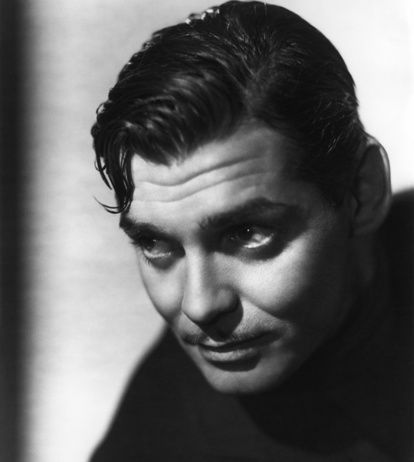
And her father was Clark Gable.


Which is more than Judy knew until she was 23.

Gable, 33, was married to someone.  Young was very young (22), and unmarried, and Catholic.  They were co-starring in “The Call of the Wild.”  Gable was the biggest star in Hollywood, and Young was already a star in her own right.  Both among the most beautiful people in the world.   

Clark Gable and Loretta Young in "Call of the Wild" (1935)
Abortion was out of the question for the (sometimes) devout and very public Catholic Loretta. 

But also out of the question for each of them and for Twentieth Century (this was the last film made at that studio before the merger with Fox) – in those days – was the ruination of both of their careers.   So here’s what happened:

Loretta traveled to Europe to hide the pregnancy.  She returned to California to give birth to Judy, who was immediately placed in a series of homes.  Then Loretta announced that she had fallen in love with an orphaned child and was going to “adopt” her – nineteenth months later.   Loretta later married producer Tom Lewis and Judy took that name. 

The little girl had very large ears.  To dampen speculation that Gable was Judy’s pop, Loretta had the child undergo an operation when she was seven to bring them closer to her head. 
Loretta frequently dressed little Judy in bonnets
to hide her Gable-like ears
She needn’t have bothered.  The cirumstances of Judy’s birth were an open secret in Hollywood.  But Loretta never told Judy, nor did anyone else.  Gable never acknowledged her (although he met her once when she was 15, spoke to her briefly, and kissed her on the forehead without admitting a thing) and never had another child until a son born after he died.  Judy didn’t discover the truth until her fiance told her when she was 23.   But Loretta refused to admit her father's identity until eight years later.  When Judy confronted her with a demand for the truth – when she was 31 -- Loretta threw up, asking tearfully how she could admit to a mortal sin.
As you might imagine, this was very traumatic to the young adult Judy.  She grew up  not knowing who her parents were, and worse, falsely believing they were some unknown couple.  She wrote a book about it called Uncommon Knowledge.  She became estranged from Loretta.  Loretta died in 2000 and in a posthumously published autobiography finally admitted that Gable was Judy’s father.
Now, as it turned out, Judy did all right for herself; no telling what it would have been like – in those days – had the truth been publicly acknowledged. 
But Judy Lewis’s story prompts a question.
One doesn’t have to approve of our times’ casual acceptance of out-of-wedlock births  to wonder which is better:   To have grown up like Judy Lewis in a time when the circumstances of her birth were regarded as scandalous, or to grow up knowing one’s parents, whether married or not, together or not?   To grow up the victim of a series of lies to protect public morality, or to redefine morality in a way that lets a child grow up without those lies?
I guess that’s two questions.
I’m not going to thrash you with my views on the sexual revolution.  OK, I’ll thrash you with them enough to say I don’t think it was a good thing.  Surely, though, a morality or a religious belief (however extreme or misguided) that results in what happened to Judy Lewis is in need of some adjustment.
Happy New Year to you all, and Judy Lewis, RIP.
*     *     *
Follow Your Cool Hot Center on Twitter:  @CoolHotCenter

Wednesday, November 23, 2011

Beware the Brilliant Fool

In prior articles, I have wrestled with how we regard the everyday concept of “intelligence” when a person who apparently has a lot of it makes terrible decisions. I have speculated that because a very prominent person – our President – fits this description, it might cause people to think about “intelligence” in a new way.   (See here and here.)
In one way it is a futile inquiry, because intelligence has many definitions. Can’t beat the first sentence of the Wikipedia entry on the topic: “Intelligence has been defined in different ways, including the abilities for abstract thought, understanding, communication, reasoning, learning, planning, emotional intelligence and problem solving.”

Well, there’s one answer right there. A person may have vast capacity for abstract thought, but poor understanding. One can still fall within the definition because a crackerjack abstract thinker, but still be defective in understanding; that is, intelligent, but wrong.

I know this isn’t any brilliant insight. Think of any issue that divides large numbers of people – for example, whether there was a conspiracy to murder John Kennedy. There will be people on both sides that we would think of as highly “intelligent,” as we mean that word in daily use. But some of those very intelligent people have got to be wrong.

In the November 2011 issue of New English Review, British writer and psychiatrist Theodore Dalrymple published an essay about a prominent biographer, Isaac Deutscher, who was a Marxist. I was struck by this passage (emphases are mine):

"His language was clear, but his thought was not. He was what might be called a dialectical equivocator, made dishonest by his early religious vows to Marxism. This made him unable to see or judge things in a common-sense way. His unwavering attachment to his primordial philosophical standpoint, his irrational rationalism, turned him into that most curious (and sometimes dangerous, because intellectually charismatic) figure, the brilliant fool. He was the opposite of Dr Watson who saw but did not observe: he observed, but did not see. He was the archetype of the man, so common among intellectuals, who knows much but understands little."

I’m guessing that if any one of us spent an afternoon in the private company of Newt Gingrich, or Barack Obama, or Mitt Romney, or Nancy Pelosi, or Rush Limbaugh, or Al Franken, just shooting the breeze on topics unrelated to their public policy positions, we would come away thinking that we’d been in the company of a pretty smart person. Perhaps even brilliant.


The brilliant Junior Samples

So what? So . . . people can be brilliant but very wrong. Some of them have stupendous knowledge and experience but no judgment; some are subtle analysts but select incorrect or thin information; some, as Dalrymple suggests, are in the grip of ideology – they apply their brains to deceive others, but mainly themselves, in the service of what they regard as a higher truth.

Most of us, most of the time, can spot the unreliable smart person. The high-IQ person who you would not trust to advise you on your day to day choices, or to be a leader of any polity to which you belong. We generally get the leaders we deserve, although not enough people saw through the brilliant fool who’s running the show now. We can debate the reasons for that another time. (Hint: the usual culprits – media bias, liberal racial guilt, a deceptive campaign, class resentment, weak opposition, disgust with the incumbent, and, truth to tell, a magnetic persona and charming manner.)

And there’s the lesson: We encounter gifted minds throughout our lives. The first time many of us are overwhelmed with the brilliance of a particular individual is college, when our professors present an image of learnedness that is absolutely genuine. And yet, faculties are overwhelmingly liberal Democrats and worse.  Strongly redistributionist, politically correct, and believers in enforced equality of result. Theories that have never worked in the history of mankind, at least not in any free society (and the unfree societies that have enshrined them have declined and even failed, some very recently and very dramatically).

Most adults understand that many of these academics are brilliant fools, but the unformed barely-post-adolescent mind daily exposed to brilliantly foolish instruction does not, and so we end up with things like The Sixties, the McGovern candidacy, and MoveOn.org.

Some of us shake it off when we start working, raising families, and paying taxes.

Some of us don’t.

Some of us think we have done so, but can still be wowed by the singular, eloquent, attractive intellect without regard to whether he or she is selling something that simple observation of the world would tell us is quite unlikely to be correct. 

And brilliant fools are everywhere, wanting our votes, our investments, our time, and our hearts and minds.

Beware.

*     *     *

Follow Your Cool Hot Center on Twitter:  @CoolHotCenter

Wednesday, November 2, 2011

I Googled "Execrable" and "Paul Krugman" and Got 81,800 Hits

I’m in favor of civility in public discourse. We need more of it on both sides of the aisle.

It’s one of the reasons that as little as I care for President Obama, I always try to find a little something nice to say about him, and to avoid all name-calling and ad hominem characterizations except under the most extreme provocation.

In Paul Krugman’s case, I’ll make an exception.

Prof. Krugman is the Nobel Prize-winning economist and Princeton professor who contributes to the New York Times Op-Ed Page. He is very liberal; a leftist, I would judge. He does not believe government spends, or controls, nearly enough. He also holds forth, way left, on political and social matters, although to my knowledge he has not received any awards in this area. (His Nobel was awarded for his work in explaining patterns of international trade through consumers’ desire to chose from a variety of products, not a subject that will nourish a lot of Op-Ed pieces.)

He recently unburdened himself of some rather brief thoughts on the occasion of the tenth anniversary of 9/11, in his New York Times column “The Conscience of a Liberal.” Here it is, in its entirety, clipped here without permission:

=======

The Years of Shame

Is it just me, or are the 9/11 commemorations oddly subdued?

Actually, I don’t think it’s me, and it’s not really that odd.

What happened after 9/11 — and I think even people on the right know this, whether they admit it or not — was deeply shameful. The atrocity should have been a unifying event, but instead it became a wedge issue. Fake heroes like Bernie Kerik, Rudy Giuliani, and, yes, George W. Bush raced to cash in on the horror. And then the attack was used to justify an unrelated war the neocons wanted to fight, for all the wrong reasons.

A lot of other people behaved badly. How many of our professional pundits — people who should have understood very well what was happening — took the easy way out, turning a blind eye to the corruption and lending their support to the hijacking of the atrocity?

The memory of 9/11 has been irrevocably poisoned; it has become an occasion for shame. And in its heart, the nation knows it.

I’m not going to allow comments on this post, for obvious reasons.

=======

This brief insult is so full of nonsense that one hardly knows where to begin.

(1) “Are the 9/11 commemorations oddly subdued?” What could that question possibly mean? Of course they were subdued.  Thousands of people were horribly murdered and our nation was awakened to the threat to it from fanatic religious totalitarians. What did Krugman expect, so that it seemed “odd” when he observed how subdued it was? Celebration? Riots? Expressions of joy? Has he ever been to a memorial service? While there, did he perhaps observe that it was subdued?

(2) He immediately realizes how fatuous that question is, so he answers himself – but even his answer is gibberish. “I don’t think it’s me, and it’s not really that odd.” Now think about that. First he says “I don’t think it’s me,” which means that he believes that his observation that the commemorations were “oddly subdued” is shared by others, validating it. But in the second part of the sentence he says, “it’s really not that odd,” which can only mean that his observation that it was “oddly subdued” was really not that correct. This isn’t just bad thinking – it’s bad writing.

(3) He then proceeds to assign his belief in the reason for its lack of oddness: “What happened after 9/11 . . . was deeply shameful.” Where was Krugman living in the days following 9/11? The nation and its leaders were at some pains to ensure that this Islamist crime did not result in our own jihad against Islam. The public’s reaction was moderate, patient, and careful. The nation’s reaction, and that of its leaders, was measured outrage. It was a proud period for the United States, not a shameful one.

(4) But he goes on, explaining that leaders transformed it into a “wedge issue.” In what respect? When the source of the terror became apparent, there was enormous support for the punitive expedition to Afghanistan. The strategy eventually employed there and the subsequent invasion of Iraq can be and were vigorously debated, but even that debate was not motivated by any “shame” in the goals articulated. To the extent the public didn’t like what the Bush administration or “neocons” did, they made their feelings known on Election Day 2008.

But even that isn’t evidence of a 9/11-justified “wedge.” Just how little of a “wedge” was “what happened after 9/11” is demonstrated by the fact that the Obama administration, beloved of Krugman, has generally continued the policies of the Bush administration in these matters, has committed even more troops in Afghanistan, and, if anything, has pursued individual terrorists with even greater heat. (The President’s shutdown of military operations comes nearly at the end of his term – coincident with a the elections, can you believe it?) Candidate Obama repeatedly said that victory in Afghanistan was essential, and stated that his administration would reverse the gains of the Taliban insurgency. Corrupt?

No, the voices calling for decreased vigilance are few and faint. The most serious “wedge” Krugman has experienced since 9/11 is the one he probably experiences when they search him at LaGuardia.

(5) Finally: To what “corruption” did “professional pundits” turn a “blind eye”? Again, there are legitimate criticisms to be made about the conduct of the Afghanistan and Iraqi wars, and pundits have made them at length almost from the outset. But in what sense is any of what took place “corrupt”? The professional punditry in this country was overwhelmingly anti-Bush both before and after 9/11. If our leadership really used 9/11 as a mask for “corruption,” wouldn’t you think that these pundits, a large number of whom are Krugman’s colleagues at The New York Times, would have their Pulizter-hungry mitts all over it? No less a liberal than Robert Kerrey, in commenting on the intelligence documents on the runup to the Iraq invasion, said that while they did not show a significant al-Qaeda connection, they did show that Saddam was “a significant enemy of the United States.”

As you sit there now, can you think of a single instance of political corruption – which Wikipedia defines as “the use of legislated powers by government officials for illegitimate private gain”? What personal, or even political, gain did any of those individuals receive? Bernard Kerik, one-time New York City Police Commissioner? He was found to have violated various laws unrelated to 9/11 and went to jail. How did things work out for “fake hero” Rudy Giuliani? George Bush? The last was re-elected in 2004, but to call that a result of corruption is to rob the word of any meaning. And by 2008, he was so widely reviled that his party suffered one of its worst electoral defeats ever.

And let’s not forget that America’s reaction to 9/11 was largely mirrored in Congressional support for the 9/11-related foreign and domestic policies during a time when the Democrats had a narrow majority in the Senate. The most dramatic reaction to 9/11, the Patriot Act, was passed in 2001 – and President Obama and the Democratic Congress has supported an extension of its most controversial provisions, and many of its provisions have survived or been extended by other legislation.

* * *

No, The only credible syllables in that entire piece are those that concede that the reasons for disabling comments are “obvious.” I myself would like to stifle reaction when I broadcast something inane.

There is a place for the contrarian, for even the provocateur, in American opinion. But most writers of that ilk at least convey the impression that they believe what they write. Krugman does not, could not. No other American, no other human, could have experienced any of the 9/11 commemorations and concluded that the proceedings today are somber because we are ashamed of how we reacted ten years ago.   I’m proud of how America reacted. We have bent over backwards to give Islam the benefit of the doubt, possibly more than it deserves, while working diligently – and successfully – to keep domestic terrorism to near zero.

This column is academic elitism at its most odious. Krugman is jabbing a stick at through the cage bars at the lovers of freedom he scorns as unsophisticated yahoos imprisoned by their naivete and ignorance. He patronizes them -- us -- from his Princeton perch whenever he can. To him, average Americans with average reactions to murderous assaults on the very freedoms that the 9-11 Islamists cannot abide, the very freedoms that allow Krugman to make a jackass of himself, are reactionary rabble. He knew this column would anger those people on the very day of their saddest recollections, and it did. It was a small, mean, act by a small, mean man.

As I said, I’m in favor of civility. But Paul Krugman is a putz. When I read bilge like this, or listen to interviews with his oh-so-entitled philosophical children now “occupying” various patches of our fine cities, I think that we have less to fear from fake heroes than from fake intellectuals.


*     *     *

Follow Your Cool Hot Center on Twitter:  @CoolHotCenter

Sunday, October 16, 2011

REVISIÓN DE TEATRO: "West Side Story"

The 2009 Broadway revival of "West Side Story" was a huge success.  I saw the roadshow last night with the Memsahib at the Dallas Musical Theater at Fair Park.  It had its moments, some very fine ones I'll get to, but I was disappointed. 

When they take Broadway musicals on the road, do they scale them down?  I thought the production seemed undernourished.  One of the most beautiful and exciting symphonic scores in American musical theater, with two gangs of male dancers and their girlfriends.  Man, with some of that music, I expected that stage to explode with the Latin-tinged rhythms and updated theatrical dance sensibilities.  The Fair Park stage isn't enormous, but for some reason, the production only rarely ignited. 

In fact, it is probably not possible to reduce the dancing cast of this show.  West Side Story is famous for giving many of the dancers speaking parts as gang members.  I have read that casting for the show is difficult because one has to find performers who can sing, dance, and act.  The show failed to take off for other reasons.

Bernardo and Anita:  "Mambo"

The acting is a problem, because the script was unrealistic even in 1957, when it opened on Broadway.  The "white" (actually, the children of European immigrants) Jets and Puerto Rican Sharks are supposed to be juvenile delinquent gangs, but in 1957 excessive vulgarity, explicit sexual references, and violent racial slurs were not permissible.  ("Spic" and "wop" were apparently exceptions.)    The result is a script (by Arthur Laurents) that invents a kind of beatnik patois that sounds very odd coming out of the mouths of actors who are supposed to be violent teenagers.  I've always had sympathy for actors struggling through some of these scenes, but a show that sounded unusual but fresh in 1957 sounds downright weird now. 

I'm not sure at whose door should be placed another of my complaints.  Amplification of musical productions is a mixed blessing.  On the other hand, you can hear everything.  On the other, if not correctly modulating, it's ear-splitting in every seat in the theater.  Perhaps generations of theatergoers since the sixties are accustomed to extremely loud musical performances, but this music -- much of which is pitched very high, including the parts sung by males -- was sometimes painful to listen to.  I assume that these shows either carry with them, or specify, their own sound engineering subject to the capabilities of the local venues.  All I can tell you is -- this show was really, really, loud.


But here is my major complaint:

Large chunks of dialogue among the Sharks were conducted in Spanish.  This was annoying enough, but someone had the bright idea of taking large chunks of Stephen Sondheim's classic lyrics and performing them in Spanish. 

Of course the Sharks were Puerto Rican.  Got it.  But the actors are not speaking for one another's benefit, you know?   Note to revival producers:  Those people on stage, they're not real people having real conversations -- they are actors speaking lines to entertain the audience.   There were probably patrons in the full house who knew what was being spoken, but if it exceeded five percent I would be surprised.  I would be surprised if that percentage were much exceeded in any city in which this was performed, including New York City.  And we're not talking about the occasional phrase -- we're talking about entire (although usuall brief) conversations that the audience could not understand.  (Most of the intra-Shark dialogue was spoken in accented English.)  Asking the audience to figure it out from the context is arrogant and presumptuous.   It sounded like what it probably was -- political correctness.  And like political correctness usually is, it was annoying and, most damaging to the production, a desperate lunge for verisimilitude that came across as fake, trying to make a point that the play itself was not interested in.

Too bad.  There were things to enjoy in this production.  The performers were talented, even though no one would mistake these fine dancers as 1950s ethnic gang members.  The leads handled the very difficult-to-sing score beautifully.  (The songs are very "rangy" -- you know, like the National Anthem, going from low to very high -- especially for the male singers, and feature Leonard Bernstein's characteristically jazzy intervals.)   Some parts of the dance numbers were striking. 

So while I enjoyed the show -- it is hard not to enjoy that music and orchestration -- I cannot recommend it whole-heartedly.  If you decide to see it, you might visit the Rosetta Stone kiosk at your local mall and see if they have an abridged course in Theatrical Spanish.

Friday, October 7, 2011

BREAKING NEWS -- New Evidence on the Catholic Church's Uneasy Relationship with Nazi Germany: The Swastika Blessing

Well, I suppose that depends on what you consider "news" and "breaking," since we're talking about a historical event here.   This article reports on information that was posted just a few hours ago (as of late Friday night, October 7), at http://www.theswastikablessing.com/.  Here's what it's all about:

Several months ago I was privileged to report an amazing discovery made by my Yale roommate, Steve Galebach.  You can find the earlier report here: "Was the the Vatican Soft on Nazism?"   It has lots of background you won't find here, so you may want to check it out.  In short:   In doing some archival research for a client, Steve found this photograph in Der Stürmer, a violently anti-Semitic Nazi newspaper (in fact, not a newspaper -- a wildly polemical propaganda rag) that was widely disseminated and influential in Germany.


Caption:  "An archbishop blesses the Nazi banner."
[Click on photo to enlarge.]
It reportedly shows Archbishop Santiago Luis Copello of Buenos Aires blessing the Nazi flag (not yet the German national flag) at the worldwide Eucharistic Congress held there in 1934.  Hitler became German Chancellor in 1933.

Is this a big deal?  Yes.  How big remains uncertain.

(1)  There are no other reports that anyone has been able to find that any senior Catholic priest ever blessed a swastika flag.  This photograph has never been noticed or reported on in any of the vast scholarship on the relationship between the Nazis and the Roman Catholic Church.   The RCC forbade blessing the Nazi symbol. 

So Steve's discovery is historic.   Future historians of Nazi-Roman Catholic relations will be required to account for it.

(2)  Second, the Vatican's emissary to the Eucharistic Congress, guest of Archbishop Copello, and the senior Catholic official present (not at this ceremony) was one Cardinal Eugenio Pacelli, the Vatican Secretary of State.  Cardinal Pacelli became Pope Pius XII in 1939.   There is a lively historiography as to Pacelli's attitude toward Nazi Germany.  While there is considerable evidence of Pacelli's disapproval of Nazism, there is enough uncertainty over what he knew and when he knew about the Holocaust to prompt one author to call him "Hitler's Pope."  (John Cornwell, Hitler's Pope, 1999; and there was also Rolf Hochhuth's play, The Deputy which was also highly critical of Pius XII on this score, later made into a movie called "Amen" by Costa-Gavras.)  Despite the controversy that continues regarding his attitude toward European Jewry, the Vatican is currently proceeding with the steps required to declare Pius XII a saint.

(3)  Copello himself was elevated to Cardinal months later, in 1935.

Archbishop, later Cardinal, Copello

(4)  The world -- including Argentina, and including in particular Catholics in Argentina -- knew quite a lot about Nazism in 1934.  Mein Kampf was widely known, as was the violent antisemitism of the Nazi Party.  The incredibly savage purge of the SA (Sturmabteilung), the Nazis' military arm, in which scores and probably hundreds were murdered (including some extremely prominent Germans outside of the military), received worldwide press and was heavily covered in Argentina.  (This "Night of the Long Knives" is one of the centerpiece events of of a current popular history by Erik Larson, In the Garden of Beasts.)  That slaughter took place in June 1934.  The swastika blessing was in October.  The Nazis' methods and motives were already viewed with alarm -- World War II, after all, was only five years off.   In the months before the blessing, official Catholic publications in Argentina condemned the Nazis for their anti-Catholic actions, among other things.  Could Copello possibly have been merely naive or uninformed?  And if he was not, does his decision to proceed reflect in any way on his superiors from Rome?

When I originally reported on this a year ago, Galebach, a staunch Roman Catholic, wasn't quite sure what to make of all this. 

Neither was I.  My initial concern was that Steve did not have any confirmation that the photograph was authentic.  It appeared nowhere (apparently) besides one of the least credible publications in history.  I had other questions, and still do, but that one was fundamental.

Well, there are two pieces of news hot off the Internet:

First, the authenticity of the photograph is no longer in doubt.  In searching through issues of the Buenos Aires newspaper La Prensa from 1934 earlier this year, Steve's wife Diane Galebach found a report of this ceremony and an explicit mention that among the flags Archbishop Copello blessed was the Nazi party flag.  Present were the German ambassador and a group of Catholic pilgrims from Germany visiting the Eucharistic Congress.  Although  not as dramatic as the photograph, this brief passage is every bit as significant -- more so, in fact, because it was not found in a scurrilous Nazi broadsheet like the photo but in a contemporaneous news account from the Eucharistic Congress itself in a legitimate newspaper.  In fact, the newspaper reported that the ceremony was a "consecration" -- a greater Catholic honor than a "blessing."  Thus, a Catholic archbishop blessed, or consecrated, a swastika on the eve of the visit to the Eucharistic Congress by the future Pius XII.  It happened.

Second, Steve and Diane have begun to publish their findings in an online book called The Swastika Blessing.  (http://www.theswastikablessing.com/)  You may download and read a free introduction that is pretty complete in itself, and for $12 you can download Volume 1, which contains much more detailed information and some fascinating background relating to the relationship between Roman Catholicism and National Socialism.  Three more volumes relating to Vatican policy towards Nazi Germany in 1934 and 1935, and additional "causes and context" research are scheduled for release before the end of the year.  For your $12 now, you get a 111-page PDF in a Power-Point-type format with lots of text and many photographs and documents, complete with translations.  Extremely interesting and clearly presented. 

[NOTE:  I reviewed and provided extensive comments and suggestions on early drafts of Steve's work on this, before Diane became more involved.  Steve's and Diane's project changed considerably in scope and presentation thereafter; I reviewed one early and very different draft of the present format, and the present incarnation not at all.  I am mentioned in their acknowledgements.]

The question before the house is:  Should this photograph -- rather, should the event it portrays -- provoke a re-examination of RCC-Nazi relations in the years leading up to World War II?  And, of more urgent current interest, should it provoke a re-examination of the attitude toward National Socialism of Cardinal Pacelli -- Pope Pius XII -- as the RCC moves ever closer to elevating him to sainthood?


Cardinal Pacelli, later Pope Pius XII
The latter is the question that exercises the Galebachs.  Both are devout Catholics.  They have chosen a somewhat unorthodox method of presenting what they've found, their book taking the form of a presentation of evidence both damaging and exculpatory to the hierarchy of the RCC in alternating sections presented by an "investigator" and "defense counsel."   I did not find this unusual approach distracting, and it has the merit of making room for a great deal of background information.   The free Introduction has quite a bit of information in summary form, it's much more than a tease.  Chapter I is a detailed overview of events at the Eucharistic Congress, including the blessing, the relationship between the major players (Pius XI, Pacelli/Pius XII, and Copello), and what was known about the Nazis' ideology and practices in Argentina in 1934.

Despite their scrupulousness in presenting evidence favorable to Pacelli/Pius XII, the overall impression the Galebachs leave is one of skepticism as to whether Pacelli's robes are entirely clean.  As a result, the reader is left with the further impression that the Galebachs believe that the episode may well be material to the ongoing beatification process for Pius XII -- and, presumably, adverse to the sainthood partisans -- although they are careful not to come right out and say it.  (Although their subheading promises "an "investigation into a photograph that changes history.") 

That's quite an impression to derive from one photograph and a confirmatory newspaper item.  I hope I am not being unfair in attributing it to them.   Is it justified?

It should be noted that no one took special note of this event at the time.  The photo appeared nowhere until it popped up some months later in Der Stürmer, but the contemporary newspaper account explicitly stated that the Archbishop had blessed the swastika flag -- it used the phrase "cruz gamada," which translates as "swastika."   Whatever this might mean to us now, it did not provoke any notice at the time that the Galebachs have been able to find.  (To my knowledge -- no idea what goodies they have in store for us in later installments.)   If, as the Galebachs have shown, the Nazis' virulent anti-Catholicism and violent suppression of religious freedom were known to Catholic officials, why not? 

The Galebachs have found themselves at the center of quite a mystery.

In the absence of direct evidence of either (1) Pacelli's complicity, or (2) Copello's intentions in blessing the Nazi banner, the Galebachs proceed in the only way available to them:  By examining the overall context of Nazi/Vatican relations in the mid-Thirties, in Argentina and Rome.  What they have produced so far, as investigators with a large family to care for and other jobs to do, is nothing short of astounding.   I don't know everything they've come up with or where their own thinking has settled, but I am looking forward to the remaining three installments.

Here's that link again:  http://www.theswastikablessing.com/

*     *     *

Follow Your Cool Hot Center on Twitter:  @CoolHotCenter

Tuesday, October 4, 2011

A Brief Rest on a Long Journey

It started a week or so ago.

Monarchs began appearing in the sky.  One at a time, flapping then coasting, flapping a little more and floating on what breeze there was.

I didn't think much about it.  Monarchs are large butterflies, but not uncommon.

I was pleased, though, to see a monarch visiting our vitex tree in the backyard one late afternoon a few days ago.  Vitex is a flowering tree, with clusters of small blue flowers at the tips of its branches.  It hails originally from the Mediterranean.  (It is also known as Chaste Tree, Chasteberry, Abraham's Balm, or Monk's Pepper.)  Ours only bloomed once last year, its first at our address, but this year it bloomed off and on all summer and at this writing is fully decked out in its autumn finery.  It is usually crowned with a nimbus of bumblebees and common honeybees.

Late Saturday afternoon, the scene changed.

I was out on the patio having a cigar and reading a crime novel, my back to the vitex.  I got up to get the grill heating for that evening's repast, when my eye was instantly drawn to motion at the vitex.

I couldn't count the monarchs.  I'll estimate two dozen, flying and lighting on the blooms.  When one would light, it would fold its wings behind it and set a spell.  When one shoved off, it would usually fly around the tree and find another spot to investigate.


Monarch on vitex (not ours)
After about an hour, I noticed that there was no more flying.  There were only these handfuls of monarchs hanging off of the bloom clusters.

So beautiful, so rare.  One of those moments where spectacle descends into your everyday life and makes you feel good about being alive.

One by one, the monarchs lifted off the vitex.  They flew around the yard for a bit, but each concluded its visit the same way.

It headed north. 

I thought well that's pretty cool, just like on the nature shows, they're flying about to orient themselves to the position of the sun, or the earth's magnetic field, or however it is they navigate, and, having done so, get going on their storied migration of thousands of miles to their overwintering grounds.

Which, uh, makes flying north in October a terrible mistake, since they're supposed to be flying south.

I considered the usual suspects for mass species-destructive behavior -- cell phone tower radiation (I was checking blog hits on my Droid); global warming (hard to be unseasonably warm in the summer, but DFW has managed it); deforestation (I'd pulled some weeds).

Seemed unlikely.

So what motivates living things?

Monarchs have little use for cash.

They'd just chowed down on vitex nectar.

That leaves  .  .  .

So, after pondering the gorgeous pastoral mystery in my own back yard, I'm going with my theory that some hot monarch butterfloozy headed north for reasons best known to monarchs if not lepidopterists, trailing a string of irresistible pheromones and ardent fluttering suitors behind her, and leaving it at that.


Mm-hmm:  monarchs breeding on vitex


Sunday, September 11, 2011

Tuesday, September 11, 2001 -- Ten Years On

What I remember most is the blue.


The empty blue, and the quiet, of a sky with no jets, undivided by crisscrossing contrails, no engine noise of aircraft going and coming from Midway and O'Hare.

Nancy and I had been married only five months. We lived on the Northwest Side of Chicago just off Irving Park, under the O'Hare flight path. We might as well have been living a century earlier, for all the evidence of the skies.

I had just turned right off Irving Park onto the Kennedy Expressway onramp when the report of the first hit on the World Trade Center came on the radio. I do not have a note on this, but I surely was listening, as I did every morning, to sports-talk radio station WSCR The Score. My recollection is also a little dim on what I listened to the rest of the way downtown, although I think The Score switched its feed to an affiliated news-radio channel, or perhaps even TV audio. If not, then I surely switched over to NewsRadio WBBM 780. For some reason, even in spite of the earliest erroneous reports that it was a small plane or maybe a DC-3 that hit the first tower, I never thought it was an accident. Can’t tell you why, just a feeling.

I was driving south on the Kennedy and toward downtown when the second plane hit.

My eyes went immediately upward – to the Sears Tower, as it was then known, already visible in the distance. The Sears was at 233 South Wacker Drive. My office was in 300 South Wacker -- kitty-cornered from it. It stood with what seems, in retrospect, like a kind of innocence.

Nancy was the principal of an elementary school in a near-northern suburb, with charge of 600 children. I called her from the car and got her out of a meeting. It was the first notice to her school. She recalls that the day proceeded with great professionalism on the part of her staff. The children were not told; Nancy thought it best that the news be presented first by their parents. The most interesting datum: Only one parent asked to take her child out of the school that day.

I had the only TV in our office, a little JVC portable with rabbit ears that had awful reception in the Wacker Drive canyon. Attorneys and staff drifted in and out for updates, disbelieving and understanding at the same time.

I didn't get any work done that day. Out my window I looked directly across the street at the looming Sears. Of course, no one knew how many more symbols of American strength and success the enemy had targeted. Building management didn't mess around. They closed the place and shooed us all out of the place by late morning.

I was struck by how normal everything seemed on the street when I left the building. No obvious evacuations, even from the Sears, no crowds gathering, what seemed like normal traffic and people just walking about as one would see on any other normal workday. The wonder was dispelled when I arrived at the parking garage to find it nearly empty.

*    *    *

With nothing to do, with wanting to do nothing, but watch TV, I began to write. When I began, President Bush was located just a few miles from my childhood home in Bellevue, Nebraska, at the Strategic Air command Underground at Offutt Air Force Base, across the barbed-wire fence from my backyard. (I think SAC had actually been deactivated as a command by that time, but the Underground -- did you see Dr. Strangelove, or that original Star Trek where they had to go back in time and infiltrate the Air Force Base in "Omaha"? – remained a central and highly-secure command center.)

I've gone back for the first time in ten years to what I wrote on that day and in the day or two following. A lot of it was political, and I don’t want to spoil this essay with too much of that. Here’s a sample:

-- The first word that came to mind about the attacks was not "cowardly," it was "pathetic."   I thought the attacks were a spasm -- that was the word I used -- unlikely to be repeated in any form for quite some time.

-- I was prepared to believe that it was Osama bin Laden's cadres, but I also remembered Oklahoma City -- everyone assumed that was a foreign attack, but it turned out to be some white loser. What persuaded me in the short run that the rush to judgment was probably in the right direction was that the dozen-or-so attackers lost their own lives. Not your typical Western strategy.

-- I assumed that I would know some of the victims. I went to law school in New York City. Many of my friends went to work in the Financial District, and my first boss at Kirkland & Ellis had become a senior executive at Morgan Stanley in the WTC. After contacting my New York City friends, I was relieved that I was unable to identify any acquaintance who died in New York.

-- This will sound cold: I wasn't sad or horrified or excited. My primary thought was that we know much more about the world than we knew the day before. It was a supremely clarifying set of actions. “Barbarism will face challenges that it has avoided to date,” I wrote. “This is a good thing.”   (I was surprised then as now that there were some of the political class who found no instruction in 9/11 at all.)
-- “Afghanistan,” I wrote. “The 51st State.”

-- I remarked on the composure of Americans There was no public demand for immediate retaliation.

-- Hundreds of movies were instantly dated. Their New York panoramas included the World Trade Center.

-- As we are moved by the memorials this weekend, we forget – I forgot, anyway – how much brainless crap we had to endure from much of the international (and even some of the American) Left in the days following 9/11. There were those who truly thought that America deserved what it got. They’re still around, and not all of them are beyond our borders.

-- I understood the concern over “destabilization” of Middle Eastern regimes if we made war against the terrorist-sponsoring governments of Araby. But what ended up on the page was: “Well, who with any sense feels invested in the stability of their particular brand of evil?”

-- Something prompted me to write: “I am not ashamed to say that I have not the slightest interest in what teenagers have to say about this conflict.” Also: “I am reasonably certain that pop culture celebrities (Madonna holding forth today, I read, that ‘violence begets violence’) should shut their pieholes for the duration.”

-- I fretted over the Problem of Islam. On the one hand, our large Muslim population was not and had never been a threat. Just as obviously, worldwide (and now domestic) terror was authored almost exclusively by Islamofascists claiming authority through the religion itself.  I could only hope that extreme moral relativism took a hit that day – not all philosophies are created equal, and some of them should die.

*    *     *

My final memory is not a 9/11 memory at all.

It starts in September 1958 in Bellevue, Nebraska.

Nowadays when kids get to first grade, a lot of them can read. Back then, only I and one other kid had this skill when we arrived in Mrs. Duvall’s classroom at Belleaire Elementary School. We could read, if not understand, almost anything you put in front of us. Let me amend that – I’m sure I didn’t understand a lot of what I read, but the other kid – his name was Bryan Jack – probably did. Mrs. Duvall gave us a stack of books and sent us off to the corner to read them while she brought the other kids along. (Our classmates were divided into groups – the Redbirds, the Bluebirds, some Other-Color-birds. Bryan and I, for some reason, were the Snowbirds.)

Bryan was a true prodigy, brilliant even as a skinny little kid. High-strung but quite apparently a “brain,” as we called gifted kids back then. His family lived just a few doors down from us. Thrown together because we could read, we became best friends. His father, like the fathers of many of my friends, was in the Air Force, and after three or four years the Air Force transferred the Jacks to Texas and I had to say goodbye to my supersmart friend.

I kept in touch with Bryan for awhile, but adolescent boys are not good mail correspondents, and the relationship faded. Fortunately, my mother stayed in touch with his mother, so I always knew a little about what Bryan was up to.

He ended up at CalTech and Stanford with multiple degrees and a doctorate.

Eventually, I learned, he went to work at the Pentagon.

As the decades passed, I seldom thought of him.

Oddly, like me, he married for the first time very shortly before 9/11. His wife was New York City artist Barbara Rachko. On her website, she displays a striking, even startling painting of the two of them titled “Us and Them.” (Reproduction is without permission – Barbara, apologies and hoping for your pardon.)


If Bryan had been sitting in his chair at the Pentagon on 9/11, he would have lived through it. He wasn’t.

He was in the plane that hit it.


Wednesday, September 7, 2011

MOVIE REVIEW: "The Help"

At first I did not care to see "The Help."  It was, I assumed, a "relationship movie," being a movie that doesn't have much comedy or killing or special effects or monsters or Western gunfighters. But my impression was that this one was all relationships, and all-female ones at that, with not much good to say about men.

In fact, I liked the movie. I can recommend it with almost no reservations. Relationships, after all, are important.

The movie is set in Jackson, Mississippi in 1962-63. It explores the relationship between white Junior Leaguers and the black maids who raised them, and who now work for them -- a pattern that had held for generations but upon which the civil rights struggles of the Sixties were placing new and unaccustomed strains.

Emma Stone plays Skeeter Phelan, a young woman who aspires to a journalism career, and who was largely raised by a black maid (Constantine, played by Cicely Tyson in a small but memorable turn). She has the idea of writing a book (which becomes "The Help") about these relationships from the standpoint of the maids. She enlists her fellow Junior Leaguers' maids, the submissive but perceptive Aibileen (Viola Daivs) and, eventually, the much less pliable Minny (Octavia Spencer) to tell her their stories.  Skeeter's growing interest in the maids' stories places her in conflict with Hilly (Bryce Dallas Howard, Ron Howard's daughter), the head of the Junior League, a woman dedicated to The Way Things Have Always Been between Southern whites and their servants.   Hilly fires Minny and blackballs her from getting any other maid positions among the society whites, but Minny eventually catches on with a cheerful wealthy outcast (Celia, played by Jessica Chastain) who does not have the proper Jackson pedigree, but who has had the good fortune to have married well and who seems to have very little racial consciousness in enlisting Minny to assist her (without her husband's knowledge) in managing the large estate that (until the end, unseen) husband has entrusted to her care.

Viola Davis
Skeeter's interest in the maids' histories is not entirely altruistic.  I mentioned her ambitions -- she wants to be published, and this motive is not glossed over in the movie.  Skeeter is in constant touch with a New York publisher (Jane Alexander).   As the film progresses, however, she identifies more closely with these tough, gifted women.  It is to the movie's credit that it does not focus overmuch on this transformation; yet we feel it through Ms. Stone's fine performance. 


Octavia Spencer
The movie is ultimately satisfying for reasons I cannot relate without spoiling it for you.  Suffice it to say that the ending, while not entirely satisfying, is far from tragic.  Hey, I cry for the neglected old toys in "Toy Story" -- I wasn't similarly moved at the conclusion of "The Help," and I got the same feeling from the attendees at the show I saw, but I count that as a good thing.  The movie doesn't overtly manipulate; it tells a story that makes sense on its own terms, with goodness being only ambiguously rewarded. 
The strength of this show is its performances.  Viola Davis and Octavia Spencer are extraordinary, and Emma Stone holds her own with these two powerful black actresses.  Bryce Dallas Howard's Hilly is a formidable foil, alternately hateful and comic; her black, close-set eyes blaze with racial righteousness.  Sissy Spacek, as her mother, has too few moments onscreen, but enough to remind us that we don't see enough of this wonderful actress.  Allison Janney is also marvelous as Skeeter's mother, caught between her own social ambitions and the welfare of the woman who had served her household for decades.

Emma Stone

Bryce Dallas Howard
Go see it, especially if you lived through those times, and especially if you didn't.

I mentioned some reservations.

I agree with David Denby in his favorable review in The New Yorker that the flaws in the movie really don't seem to matter much, fading as the movie progresses.  I think this is because of the intrinsic drama of the material.  I also think the viewer may also be distracted by the thought that to some degree, the frictions that were life-and-death in the Sixties continue to linger, in a far less poisonous but uneasy social dialogue between monied people and those who mow their lawns, fix their media centers, and, yes, assist them with raising their children and maintaining their households.

So my reservations are mainly quibbles.  I did not entirely buy in to the shallowness of the Junior Leaguers or the sometimes unvarnished villainy of Hilly, although goodness knows there are villains abroad when a change that needs to happen is resisted by those whom the status quo favors.  And I thought that the maids' reactions when faced with the ladies' slights were more revealing than your average Southern maid would have exhibited.

Given the dramatic subject matter and the historical fulcrum upon which both the book and the movie balance, it is somewhat surprising that both are regarded as of interest primarily to women.  It must be because the men in the movie are almost invisible, mostly afterthoughts.  The show tries to gin up a romantic story for Skeeter, but it's slight and unconvincing.  Hilly's husband is like Hilly, bad.  Celia's husband, turns out, is good.  While the period clothing and hairstyles (worth the price of admission for those of us who lived through them) serve to highlight the individuality of the women, they tend to make the men unmemorable. 

Hey, I'm glad it wasn't a movie about the way men treated The Help.

Check it out, guys.

*     *     *

Follow The Cool Hot Center on Twitter:  @CoolHotCenter